


Why Your LED Strips Fade at the End: Everything You Need to Know to Prevent It

Have you ever installed a long run of lights only to find that they look bright at the start but become dim or change colour towards the end? This common issue is known as voltage drop, and it happens when the electrical current loses its strength as it travels further down the line.
Here is a simple guide to ensuring your lighting stays perfectly bright from start to finish.
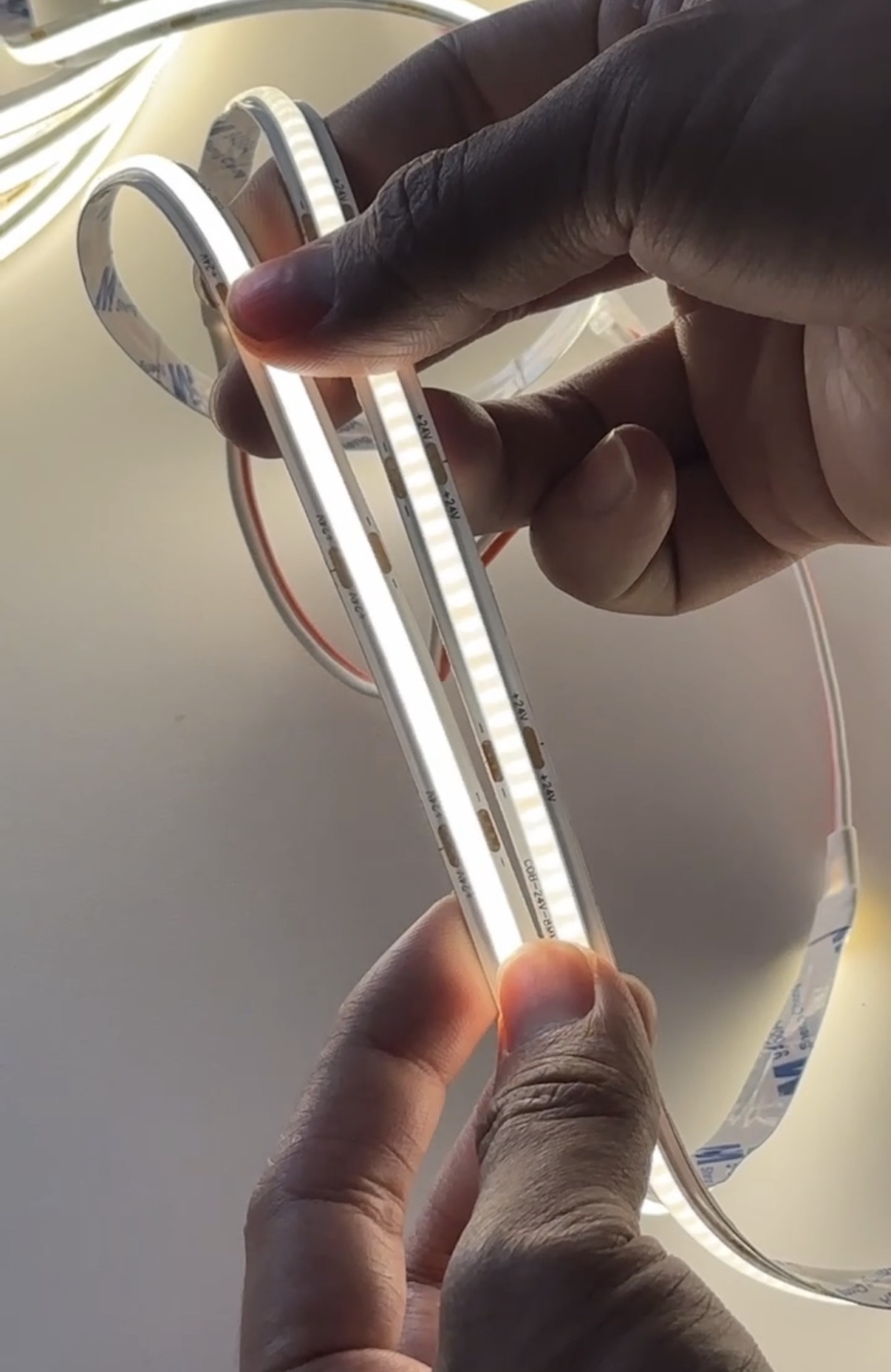
Safety First: Pre-Installation Measures
Before you begin any wiring or installation, your safety is the top priority. Always remember to switch off your MCB (Main Circuit Breaker) and check with a test pen to ensure there is no live current before you start handling any connections. It is also highly recommended to measure the distance starting from your actual plug point to the very end of the installation area—not just where the strip will be stuck—and buy a little extra cable to have as a spare.
The 10-Metre Power Injection Rule
The most important secret to a professional installation is the 10-metre rule. To prevent voltage drop, you must ensure there is a power injection at least every 10 metres. Even if you are using a very powerful power supply, the voltage will naturally decrease over a long distance if it is only connected at one end. By adding a fresh power connection every 10 metres, you keep the brightness consistent across the entire length.
Effective Methods for Power Injection
There are several ways to deliver power to your strips to keep them bright. The goal is to minimize the distance the electricity has to travel through the LED strip itself, as the strip offers more resistance than copper wiring.
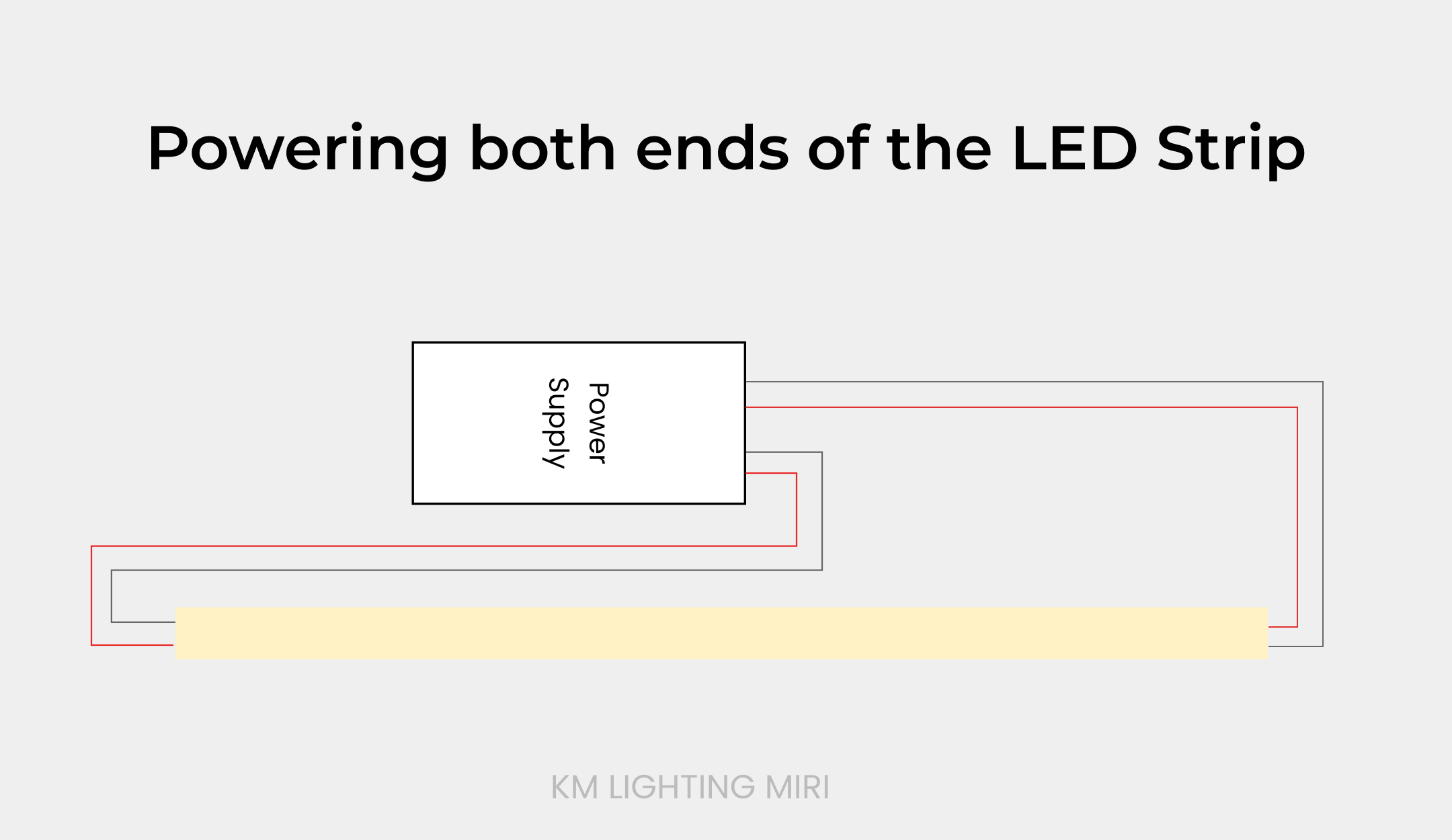
- Power from Both Ends: For a single continuous strip, you can connect the beginning to the power supply and then run an extra set of wires from the same power supply to the very end of the strip. This allows power to enter from both sides, effectively doubling the length you can run without seeing a fade.
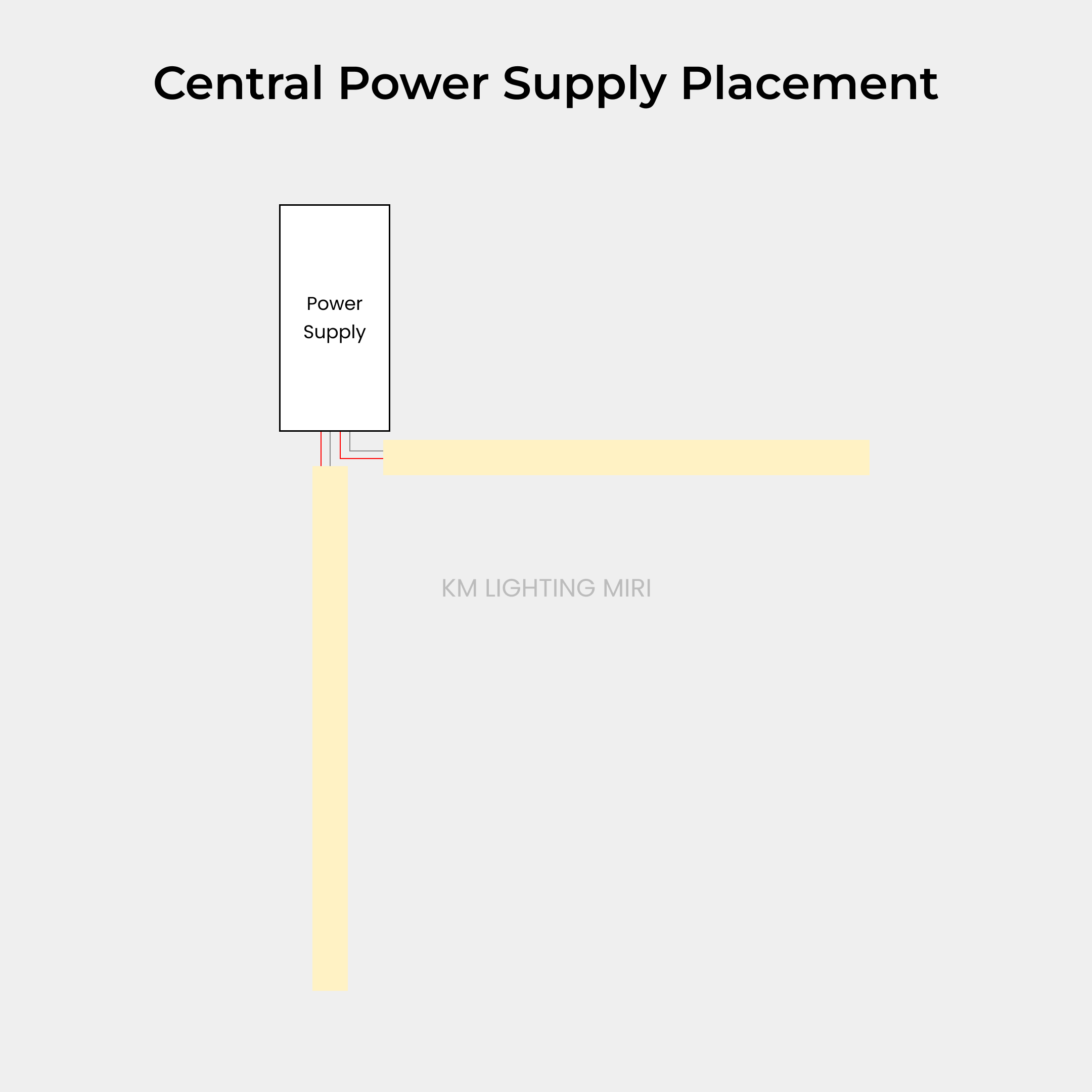
- Central Power Supply Placement: Instead of starting your power at one end of a long room, place your power supply in the middle. You can then split your run into two sections—for example, running one strip to the left and another to the right. This immediately halves the distance the current needs to travel through each section of the lights.
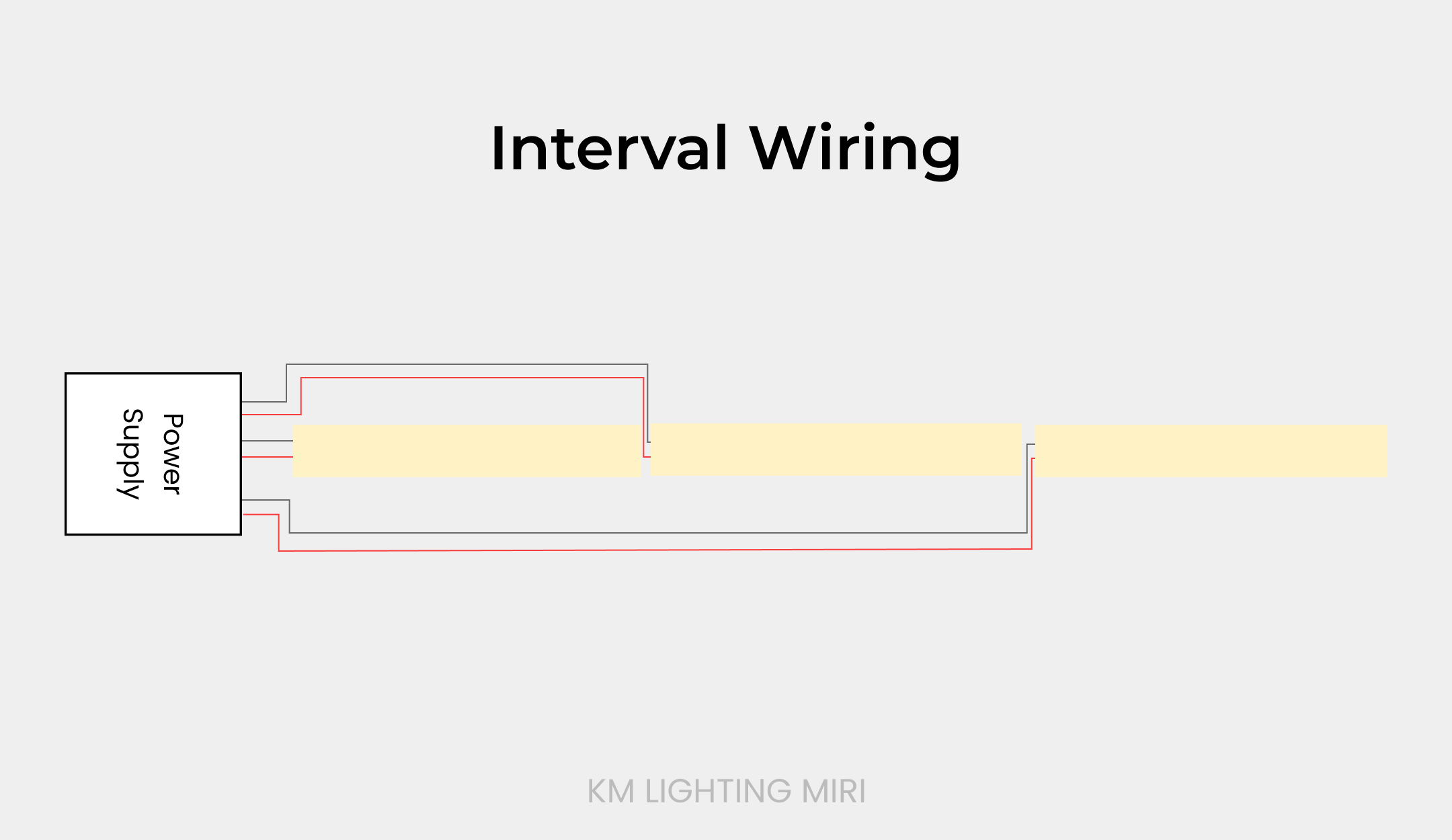
- Interval Wiring: For very long distances, you can run a main power wire alongside your installation and connect it back to the LED strips at regular intervals. This provides a shortcut for the electricity to "jump" into the strip wherever it is needed most.
Calculating and Selecting Your Power Supply
Your transformer must be strong enough to support the total length of your led strip. If the wattage is too low, your lights will look dim and won't reach their full brightness. You can calculate exactly what you need by using this formula:
Wattage per metre x Total length = Required total wattage.
For example, if you are installing a 50-metre run and the strip uses 8w per metre, you will need 400w of power (50 x 8 = 400). In this case, you could use a combination of transformers, such as one 300w and one 100w unit, or two 200w units, depending on your layout.
Pro Tips for Power Supply Health
- Always Oversize Your Supply: When picking a power supply, always choose one with a wattage rating higher than your calculated requirement. This prevents the unit from overworking or overheating, which ensures a much longer lifespan for your hardware. (eg. for 150W unit, use 200W power supply. )
- One Circuit, One Supply: For safety and to maintain electrical balance, you should only use one power supply per circuit.
Matching Hardware and Final Connections
It is vital to match your hardware correctly. If you are using a 12v led strip, you must use a DC12V transformer power supply. Using the wrong voltage can lead to poor performance or even permanent damage to your equipment.
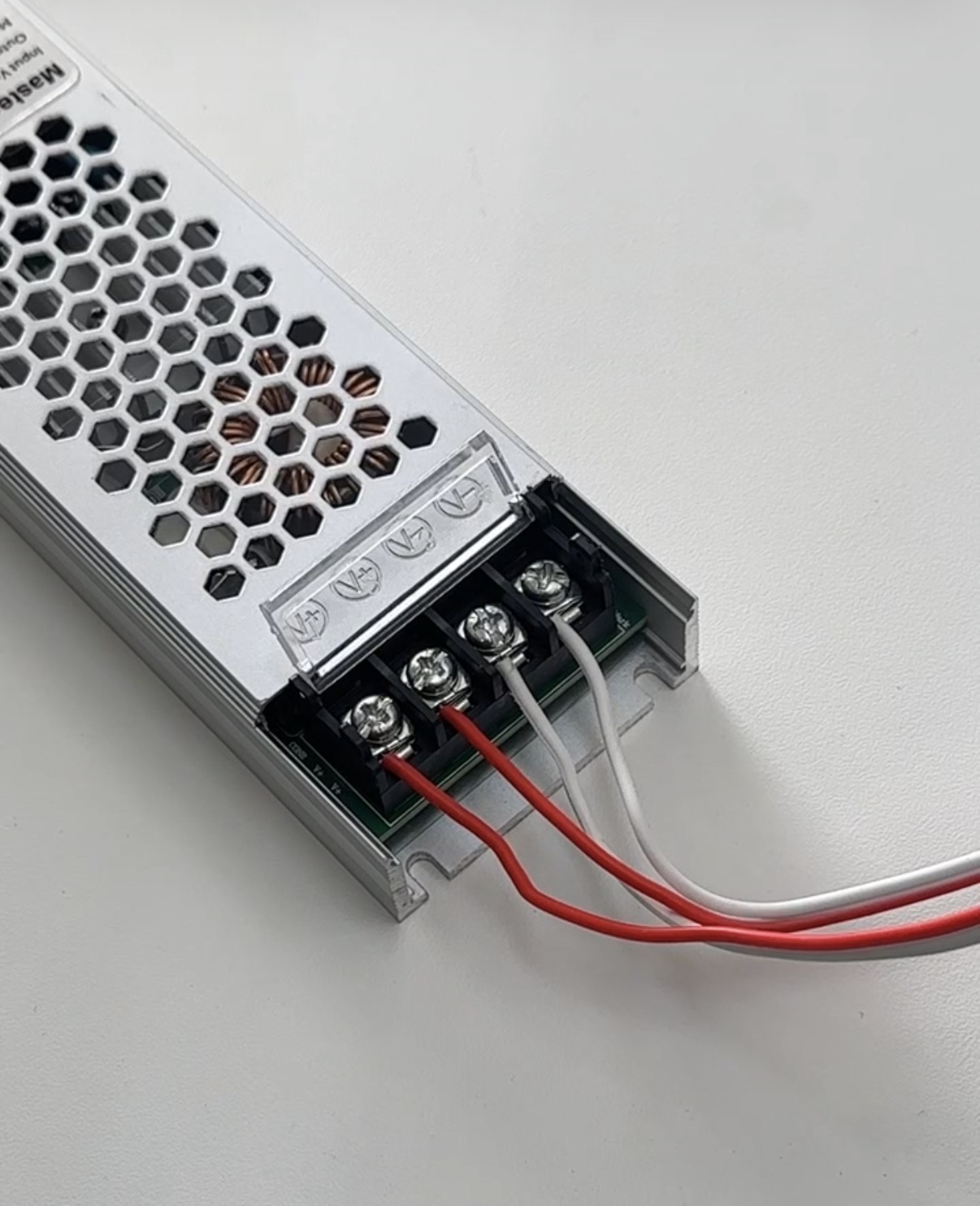
If you need to connect three or more sections of led strip that have been split up, you can share the output terminals on your power supply. For a standard pair of wires, such as red and white, you can connect one to the left side and one to the right side of the output terminal, some power supply allow up to 2-3 pairs of wires. Just always ensure that the total wattage of all connected strips does not exceed the capacity of your power supply.
Important Disclaimer
Please note that results and performance may vary depending on the brand of power supply and the quality of materials used. Different manufacturers have different build standards, and factors like wire gauge or ambient temperature can also affect how your lights perform. Always check the specific specifications of your hardware for the best results.
Check out our TikTok for a video version of these tips! Watch here: https://www.tiktok.com/@kmlighting.my/video/7588087333249961236
Looking to get your hands on the gear mentioned above? We are a retail shop fully stocked with high-quality LED strips and reliable power supplies mentioned in this guide. Feel free to drop by our shop at KM Lighting Electrical in Miri, Sarawak, to see the gear in person or order directly from our website at **kmlighting.my** — the prices are exactly the same whether you shop in-store or online!
 Lot 6157, 6158 Pusat Bandar Permyjaya, Phase 6, 98000 Miri, Sarawak
 +60145918080
 Open Everyday | 9am - 6pm